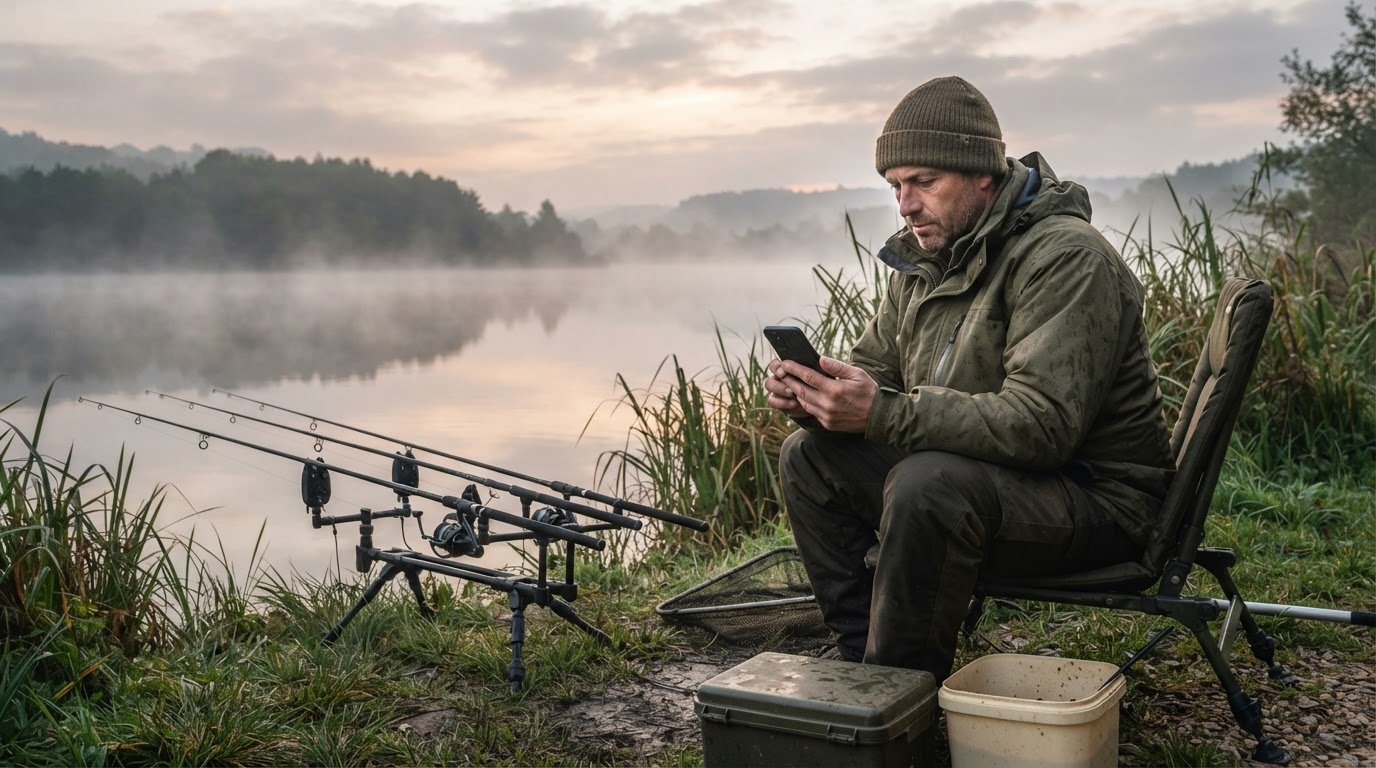
Carp Fishing Logbook: Record Sessions, Bait and Results
A catch alone rarely explains what made a carp session work. Learn what to record in your carp fishing logbook, from bait and rigs to conditions and timing, and how to compare sessions for patterns worth testing.
Carp Fishing Logbook: Record Sessions, Bait and Results
One memorable carp can make a session seem easy to explain, but a catch alone rarely shows what made the difference. A useful carp fishing log app records comparable sessions, including the conditions, bait and tackle behind the result, so you can look beyond your biggest fish.
It’s easy to forget details once you’re home, but keeping notes shouldn’t take you away from fishing. This guide explains what to record during a carp session and how to review catches, rigs, bait and conditions for patterns worth testing, not guarantees. A simple routine helps you keep records consistent without turning each trip into paperwork. FishingStat brings catch records together with live-session notes on bait, feed, rigs and time in the water. Whether you use an app, a notebook or both, the aim is the same: make your next decision with a clearer view of what you’ve observed.
Key Takeaways
- Build a carp fishing log app around session context as well as catches, so you can make fairer comparisons between trips.
- Use consistent notes for venue, timing, conditions, bait, rigs and tackle to make your records easier to review.
- Keep logging practical: capture brief facts as things change, then add fuller details after the session.
- Compare similar sessions and separate what you observed from what you think caused it before changing your approach.
Table of Contents
- Why a Carp Fishing Logbook Needs More Than a Catch Record
- What to Record in a Carp Fishing Logbook
- How to Keep Carp Fishing Notes Useful Without Slowing Down
- Turn Carp Fishing Logbook Entries into Better Questions
Why a Carp Fishing Logbook Needs More Than a Catch Record
A carp fishing logbook records both your catches and the circumstances surrounding each session. A carp fishing log app that notes only a fish’s weight preserves the result, but not the choices and conditions that might help you understand it later. Venue, season, weather, water conditions and approach give each entry context for comparison.
What makes a carp session worth recording?
Record the trip, not just the highlight. Note where and when you fished, how long you stayed, which bait and rig you used, and any changes you made. Add catch details when you can, such as the time and the rod that produced the fish. These notes make sessions worth comparing even when you blank.
For example, “carp caught on a boilie” leaves useful questions unanswered: which bait, at what time, and after how long in the water? A short note such as “fishmeal boilie, right-hand rod, just before dusk” gives you more to work with when reviewing the session.
Why one successful session is not a rule
One result can’t show that a bait or rig will work in every situation. Carp behaviour and feeding can vary with venue, season, weather, water temperature and fishing pressure. Even useful background, such as carp species and their history, can’t tell you exactly how fish will respond at a particular water on a particular day.
Use your records to spot observations worth exploring, not to prove cause and effect. If a bait catches during several similar sessions, compare those trips more closely rather than assuming it will work next time. Check other differences too, including timing, conditions and changes to your approach. A complete session record helps you ask better questions while leaving room for uncertainty and changing conditions on the bank.
What to Record in a Carp Fishing Logbook
A useful carp fishing logbook groups details so you can compare like with like: session context, approach, tackle, conditions and catch information. Start each entry with the venue and date, then note your arrival and finish times. Use the same names for your rods, rigs and baits each time. Consistent wording makes old entries easier to understand and compare.
Capture the approach: bait, rig, rod and timing
For each rod, record the setup and bait presented, including any change during the session. Note when you made the change and, if a fish followed, which rod produced it and when. This timeline helps you judge a bait’s result in relation to the time it spent in the water. FishingStat’s live session tracker helps you monitor session time, bait and rigs as the trip unfolds.
Keep descriptions specific enough to recognise later, but use terms you’ll remember. If you alter a rig or move a rod, record the change and its time rather than noting only the final setup.
Add conditions and catch details
Alongside the date and venue, record relevant weather and water observations, such as a changing wind or a noticeable shift in water clarity. For each catch, note the species, size or weight, photo, time, rod, bait and rig where known. The FAO’s fishery data collection resources offer wider context for the value of consistent records.
Separate what you saw from what you suspect. “Caught on the left rod at dusk” is an observation; “the wind pushed carp onto that spot” is an explanation to test, not a confirmed fact. Mark uncertainty clearly instead of filling gaps later from memory.
- Session: venue, date and start and finish times.
- Approach: rod, rig, bait, feed and any changes with their times.
- Conditions: relevant weather and water observations.
- Catch: species, measurement, photo and setup details, if known.
Choose a paper record or a digital FishingStat fishing logbook, then use the same simple fields each trip. A consistent record is more useful than a long entry written only when something memorable happens.
How to Keep Carp Fishing Notes Useful Without Slowing Down
A useful carp fishing log app doesn’t need a running commentary. Capture the essentials in brief, factual notes while you fish, then add helpful details after you’ve packed up. A steady routine makes recording easier and keeps your attention where it belongs.
A quick routine for recording a session
- Open a session record. Add the date, venue and planned session times, then note your starting rod, rig and bait details.
- Record changes as they happen. If you switch bait, alter a rig or move a rod, add a short note and the time. Don’t rely on remembering which setup was out earlier.
- Log each catch. Add the time and relevant catch details. Take a photo when practical, without delaying safe handling and care of the fish.
- Review the entry afterwards. Add fuller observations while the session is still fresh, and mark anything you can’t recall as unknown or approximate.
Keep notes short on the bank. “Changed to sweetcorn, left rod, late afternoon” is easier to write and compare than a long account of every decision. FishingStat’s live session tracker keeps session time, bait and rigs together as you fish.
Keep entries consistent enough to compare
Choose labels you’ll use again, such as “left rod”, “bottom bait” or the bait’s familiar name. If you call the same setup by different names across entries, later comparisons become harder. Consistency matters more than adding detail for its own sake.
Try this compact template on paper or in a digital record:
- Session: date, venue, start and finish
- Setup and changes: rod, rig, bait, change and time
- Catch: time, details and photo, if practical
- Conditions and follow-up: brief observations; unknown or approximate details clearly marked
Use a repeatable routine with FishingStat’s fishing logbook to keep session and catch records together. The aim isn’t paperwork; it’s a clear account you can trust when you review your fishing later.
Turn Carp Fishing Logbook Entries into Better Questions
Review your records by grouping sessions with something meaningful in common: the same venue, similar time of year, comparable conditions or a familiar approach. Then compare bait, rig and timing. A carp fishing log app can show where observations repeat, but it can’t isolate every factor or guarantee the same result on your next trip.
Look for patterns without overreading the log
Start with like-for-like comparisons where possible. If catches occurred during similar seasonal conditions on the same water, ask whether the bait, rig or time of day also matched. Note differences in weather, water conditions, venue and fishing pressure, since they may affect how useful the comparison is.
Keep the observation separate from your explanation. A recurring result is a question to explore, not proof of cause and effect. The idea that season beats brand loyalty is a useful reminder to consider seasonal context, not a rule that predicts what carp will take.
|
Recorded observation |
Question to explore |
|
Catches came on the same bait during similar seasonal conditions. |
Did timing, rig or other conditions also match? |
|
No catch followed a rig change. |
Was there enough comparable fishing time to assess the change? |
Keep a carp session history with FishingStat
If digital records suit your routine, FishingStat brings catch and session details together. Catch entries can include a photo, species, size and gear, while the live session tracker lets you record session time, bait, feed and rigs. Reviewing those details can help you frame better questions about your own trips, without treating a pattern as a promise.
Start tracking your next fishing session with FishingStat.
Make Your Next Session a Clear Starting Point
Before your next trip, choose a simple way to record the details you’ll want to find later. Keep the format manageable and make a quick review part of packing away, so your notes stay organised.
Think of your carp fishing log app as a working record, not a finished report. Add observations as your routine develops, and use them to decide what you’d like to pay closer attention to during a future session.
Set up your first entry before you head out, then build a record at a pace that feels practical. If a digital log suits the way you fish, start tracking your next fishing session with FishingStat.
Frequently Asked Questions
Is a digital carp fishing logbook better than a paper notebook?
Choose the format that makes it easiest to find and use your notes later. Handwriting may suit quick shorthand on the bank, while a digital record may suit anglers who prefer to sort entries on a screen. If you use both, decide which is the main record and transfer notes consistently to avoid ending up with two incomplete histories.
Can a carp fishing logbook help me choose bait?
It can help you compare how you presented bait, not select a universally best option. Note whether you used it on the hook or as feed, and how it was prepared. Those details make your records more informative when you revisit a result. Treat any preference you notice as specific to your own sessions and circumstances.
How often should I update my carp fishing log?
For a session that runs across several days, add a clear day heading or date marker at each new day. This keeps overnight changes and separate periods of fishing distinct in your record. For shorter trips, use the same session entry throughout, and make sure any notes added later are assigned to the right part of the trip.
Does keeping a carp fishing logbook guarantee more catches?
No. A log records your decisions and results; it can’t control whether a carp feeds. To judge whether an entry is useful, note whether you followed the approach you intended, even if no fish came. That helps you distinguish a session where you carried out the plan from one where circumstances led you to change it.