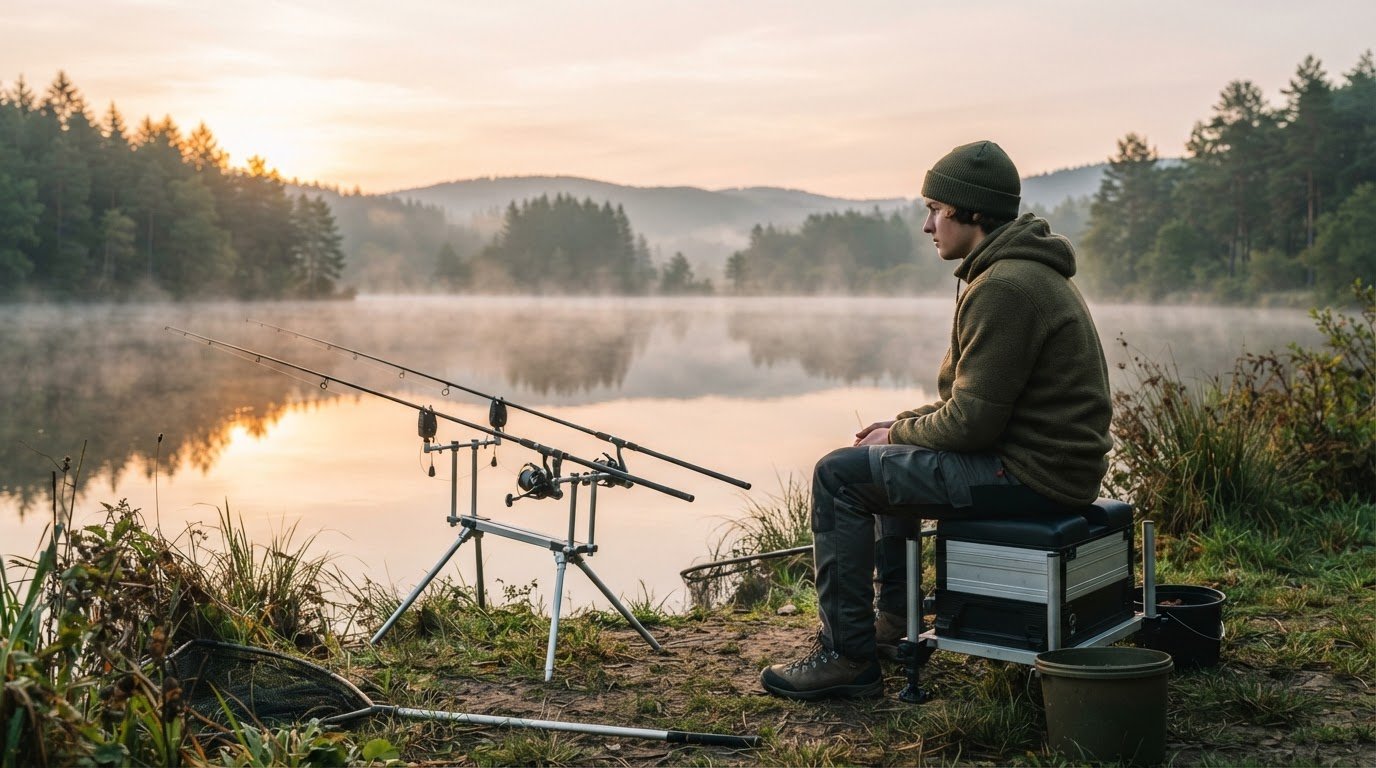
Beginner Fishing Mistakes to Avoid: A Practical Guide
Avoid common beginner fishing mistakes and improve your catch rate with practical tips on tackle selection, simple rigs, bankside stealth, reading weather conditions, and learning from every fishing session. Discover how tracking your setups, bait choices, and environmental factors can help you make smarter decisions and become a more consistent angler.
Beginner Fishing Mistakes to Avoid: A Practical Guide
Why do some anglers consistently land fish while your rod stays silent? It's rarely luck. More often, overlooked beginner fishing mistakes to avoid separate a successful session from a frustrating day. This comprehensive guide from FishingStat identifies these common errors and explains how to fix them with data-backed advice. We'll explore essential gear setups, effective bankside behavior, and the importance of tracking your results for consistent success.
Quick Answer: To avoid common beginner fishing mistakes, simplify your rigs and prioritize bankside stealth. Use line and hooks that match your target species and venue. Success comes from tracking your results and adjusting for variables like weather and water temperature. Consistent catches require learning from every session rather than repeating past errors.
Key Takeaways
- Simplify your setups by adopting a "less is more" approach to rigs, reducing tangles and improving bait presentation.
- Increase your catch rate by mastering bankside stealth and learning why the windward shore is often the most productive spot.
- Eliminate common beginner fishing mistakes to avoid, such as the "panic strike," to ensure more bites result in secure hookholds.
- Build a personal database of success by tracking variables like weather and bait effectiveness to stop repeating past errors.
Table of Contents
- Common Gear and Setup Errors That Spoil Your Session
- Environmental and Behavioral Mistakes on the Bank
- Technique and Handling: Small Errors, Large Consequences
- The Biggest Mistake: Not Learning from Your Sessions
Common Gear and Setup Errors That Spoil Your Session
Success begins with your connection to the fish. Neglecting knot strength is one of the most common beginner fishing mistakes to avoid. Always moisten your line before tightening to prevent friction damage and give it a firm pull to verify the seat. This small habit prevents unnecessary heartbreak on the bank.
Hook selection also dictates your success rate. Using a heavy gauge hook with a delicate bait like a single maggot ruins the presentation. Understanding these basics of angling ensures your terminal tackle works with the environment. Don't let a mismatched hook be the reason you go home empty-handed.
Rig Complexity and Beginner Fishing Mistakes to Avoid
Beginners often believe more components lead to more fish. Complex rigs tangle easily and create unnatural resistance that spooks wary fish. A simple running rig often outperforms high-tech setups by allowing the fish to pick up the bait without feeling immediate weight.
Heavy weights can spook fish in shallow or clear water. Keep your setup light and simple to ensure the best possible presentation. Let the bait move naturally to attract the shoal. This approach reduces tangles and keeps you fishing longer.
Line and Terminal Tackle Matching
Don't just choose a line based on the weight of the fish you hope to catch. Consider venue features like sharp gravel bars or thick lilies that require higher abrasion resistance. Terminal tackle refers to the collection of hooks, swivels, and weights that must be balanced to ensure your rig functions correctly.
Recording your setups helps you identify patterns in gear failure over time. Track exactly which rigs or line strengths result in landed fish to avoid repeating setup errors. This data-driven approach builds your confidence on the bank. Start tracking your next fishing session with FishingStat.
Environmental and Behavioral Mistakes on the Bank
Fish sense pressure changes through their lateral lines. Loud footsteps on the bank send shockwaves through the water that signal danger. This lack of stealth is one of the most common beginner fishing mistakes to avoid. Identifying these behavioral errors helps your progression toward angling mastery.
The wind is your friend, not your enemy. While it's easier to cast with the wind at your back, ignoring the breeze is one of the beginner fishing mistakes to avoid. The 'windward shore' is often where the fish congregate because moving water carries oxygen and food. Understanding the relationship between wind and water temperature is a hallmark of a knowledgeable angler, especially since fish eat much less in colder conditions.
Reading the Water and Weather
Barometric pressure is a silent factor that determines session success. Rapidly changing pressure often triggers intense feeding windows for predator species like pike or perch. Learning to identify features like marginal shelves, overhanging trees, and underwater plateaus is essential for finding active fish. You can record these environmental variables to discover exactly which conditions produce your best results at your local venue.
Stealth and Presence
In cold water, less is always more. A heavy hand with groundbait can kill a swim because the fish's metabolism slows down significantly. If the tip hasn't moved in two hours, don't be afraid to relocate. Active anglers consistently out-fish those who wait in the 'One Spot' trap, so keep your profile low and blend with the bankside background.
Technique and Handling: Small Errors, Large Consequences
Is your rod tip twitching without a result? Beginners often strike at every movement, but these are frequently "liners" caused by fish brushing against the line. Striking too early spooks the shoal and leaves you with an empty hook. Wait for a positive, sustained take. Mastering this patience helps you bypass common beginner fishing mistakes to avoid.
Feeding the swim is a balancing act. Dumping too much bait at once is one of the beginner fishing mistakes to avoid. It fills the fish up and reduces the chance they'll pick up your hook bait. Instead, feed "little and often" to keep the shoal active and competitive. This methodical approach creates a steady rhythm that attracts more fish over time.
Don't forget your reel's drag system. Set the tension before your first cast. If the drag is too tight, a sudden run will snap your line instantly. If it's too loose, you won't be able to steer the fish away from snags. Find a balance where the line gives under firm pressure.
Mastering the Strike and Fight
Setting the hook requires a controlled sweep rather than a violent jerk. For species like perch, a slight delay allows the fish to fully take the bait. For carp on bolt rigs, the fish often hooks itself against the weight of the lead. Once the fish is on, keep the rod high. Maintaining constant rod pressure is vital. Slack line is the most common reason hooks pull free during a fight.
Fish Care and Ethics
Protecting your catch ensures the sport remains sustainable for everyone. Always use a padded unhooking mat to shield the fish from rough or hot ground. Always use wet hands when handling your catch to preserve their protective slime coating. Minimise the time the fish spends out of the water. You can use a live session tracker to monitor how these technical adjustments and different baiting patterns improve your landing rate over several sessions.
The Biggest Mistake: Not Learning from Your Sessions
Why do you keep blanking in the same conditions? Most anglers treat each trip as an isolated event. This is the ultimate "Memory Trap." You can't expect your brain to accurately recall the specific barometric pressure or bait mix that worked six months ago. Failing to document these details is one of the most significant beginner fishing mistakes to avoid.
Success is a data game. You need to record the species, bait type, weather patterns, and exact time of day for every catch. Over time, this data reveals your "Personal Best" conditions. You'll stop guessing and start fishing with a plan based on your own history. Using FishingStat to document every catch ensures you never repeat the same tactical errors twice.
Transitioning to a Digital Logbook
A live session tracker changes how you view your time on the water. It monitors rod time and bait effectiveness with stopwatch precision. By reviewing your history, you can access personalized angling advice that highlights what you're doing right. This digital mentor helps you move away from the frustration of disorganized records toward a sense of mastery and clarity.
Building Your Personal Fishing Map
Visualizing your success across different venues and seasons helps you identify where to go and when. You'll see patterns in fish movement and feeding habits that remain invisible to those who don't keep records. This organized approach builds long-term confidence. It transforms your hobby from a series of random events into a structured journey of improvement. Start tracking your next fishing session with FishingStat.
Mastering the Learning Loop for Better Results
Success on the water is built on a foundation of simple rigs, bankside stealth, and technical patience. By simplifying your gear and paying attention to environmental cues like wind and water temperature, you remove the barriers between you and the fish. Addressing these beginner fishing mistakes to avoid is the first step toward consistent catches and long-term confidence. Every session is an opportunity to refine your approach and stop repeating the same tactical errors.
Mastery comes from documenting your journey and analyzing what works. You can track personal bests with precision. Use the live session stopwatch for real-time rig monitoring. Visual mapping of your entire fishing history allows you to see patterns that others miss. It's time to move past the frustration of disorganized records and start fishing with data-backed clarity. Start tracking your next fishing session with FishingStat and turn every blank into a lesson for your next success. The water is waiting; go out and claim your progress.
Frequently Asked Questions
What is the most common mistake beginners make when choosing bait?
The most common error is choosing a bait size that is too large for the target species' mouth. Beginners often assume big baits attract big fish, but this usually results in missed bites or spooked shoals. Always research the natural food sources of your venue before your session. Matching your bait to the local environment ensures your offering looks familiar and safe to resident fish.
How do I know if I need to change my fishing spot?
You should consider moving if you haven't seen signs of activity or received a bite within 90 minutes. Many anglers wait for fish to come to them rather than searching for active shoals. Changing location is a proactive way to address beginner fishing mistakes to avoid. Keep your gear mobile so you can quickly relocate to marginal features or areas with better wind conditions.
Why do I keep losing fish right before I net them?
Losing fish at the net is usually caused by lifting the fish's head out of the water too early. This creates a pivot point that can pull the hook free or snap a light hooklink. Keep the fish submerged and draw it over the net's rim in one smooth motion. Avoid stabbing at the fish with the net, as this sudden movement often triggers a final run.
Can barometric pressure really affect my fishing results?
Barometric pressure significantly impacts fish behavior by affecting their internal buoyancy and willingness to feed. High, stable pressure often results in fish moving higher in the water column or becoming lethargic. Conversely, a falling barometer frequently signals a peak feeding window for many freshwater species. Understanding these atmospheric shifts helps you identify the best times to be on the water for maximum catch potential.
Is it better to use a simple or a complex rig as a beginner?
A simple rig is significantly better for beginners because it minimizes tangles and maximizes your time with a bait in the water. Complex setups often have high failure rates when tied by inexperienced hands. Mastering a basic running rig or a standard float setup builds the foundational skills needed for more advanced methods later. Keeping your terminal tackle streamlined is a proven strategy among beginner fishing mistakes to avoid.